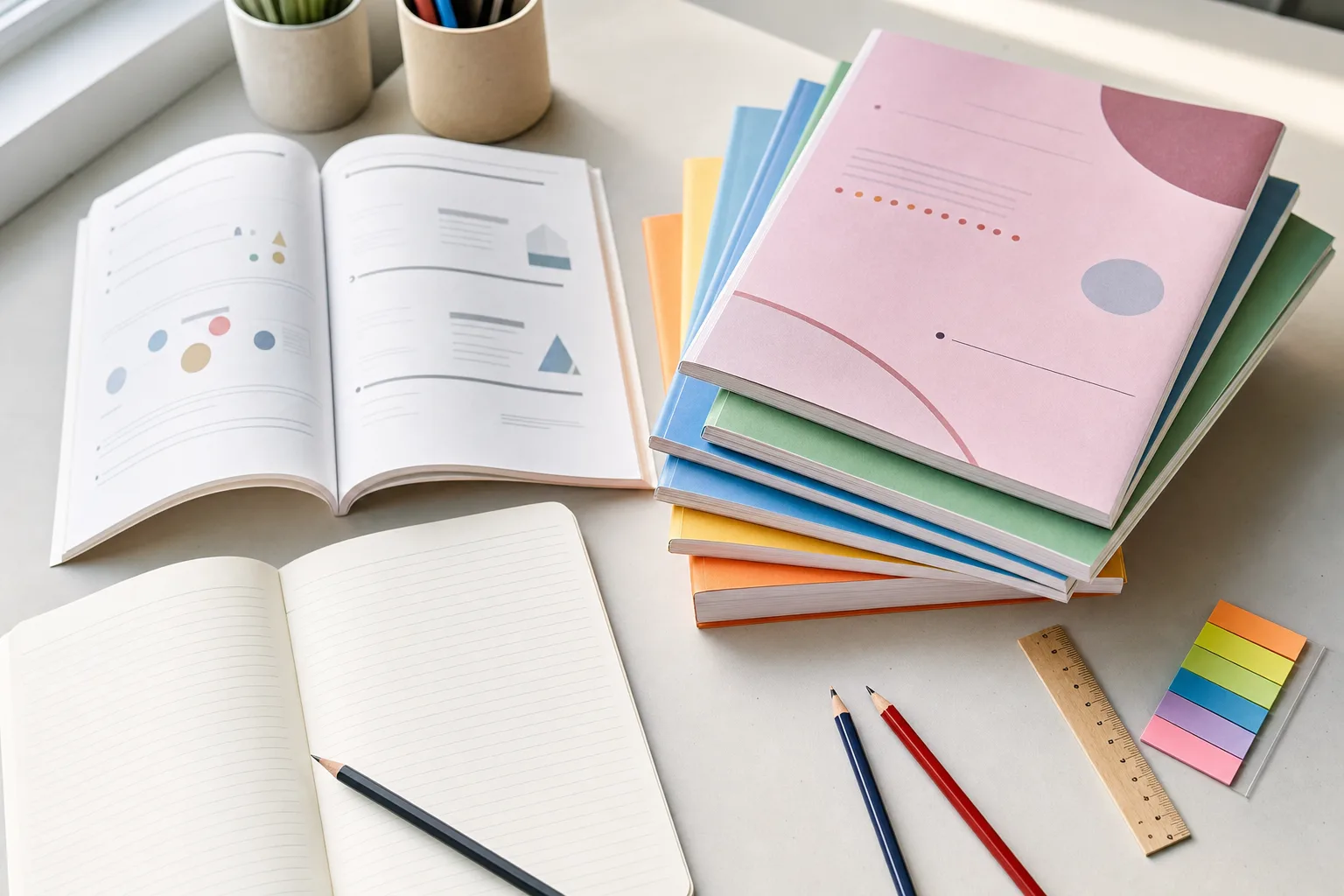
Best-seller lists can reveal what families notice, but popularity does not establish fit. The right book addresses a current need at a usable level and makes correction possible.
How to choose and use choosing assessment books
Name the job
Choose whether the book is for explanation, topical repair, mixed retrieval, extension or paper rehearsal. A book trying to do everything may do none of it well.
Match the format to the learning job
An explanation guide introduces or repairs a concept. A topical workbook builds accuracy in one area. Mixed revision tests whether the learner can select a method, while a full paper rehearses examination conditions. Name one job before shopping and compare only books that perform it. Then use schoolwork to set the starting point. Buying advanced practice for a missing foundation often creates guessing, dependence on solutions and unnecessary conflict without solving the original gap.
- Write the target topic on a note.
- Avoid two books with the same job.
- Choose challenge only after core work transfers.
For the next step, browse all learning resources.
Inspect inside
Read a sample explanation, attempt three questions and inspect the answer support. Check syllabus alignment and publication date when these matter. Our archive guides to Singapore Asia Publishers and BlueTree Education apply this to two familiar publishers.
Perform a five-minute sample-page test
Read one explanation and ask whether it shows why the method works. Attempt an early, middle and later question to see how difficulty changes. Inspect whether answers include steps, acceptable alternatives or only final values. Check the exact level, subject, syllabus relevance and edition where these can change. Finally, look at layout: print size, writing space and visual density affect whether a learner can use the page independently. Cover claims cannot answer these questions.
- Compare samples beside recent schoolwork.
- Look for gradual variation, not repeated clones.
- Check that correction is possible at home.
For the next step, compare Mathematics books.
Plan completion differently
Finishing every page is not the goal. Select useful work, review errors and stop when evidence shows the gap has closed.
Use a stop rule instead of chasing completion
Select a short set, mark it promptly and classify the errors. If the learner explains the method and succeeds on a changed question after a delay, move on or return the book to the shelf. If the same error continues, rereading the solution and completing more identical items may not help; change the explanation, representation or level of support. A stop rule protects time for reading, sleep and other subjects while keeping the resource tied to evidence.
- Review after a defined number of sessions.
- Retry with a different surface form.
- Do not save every page for exam season.
For the next step, use the guided resource finder.
Match the book format to the job
Start with the learning need, then inspect books that are designed to meet it.
| Resource type | Main job | Look for |
|---|---|---|
| Concept guide | Introduce or repair understanding | Clear models, examples and explanations |
| Topical workbook | Build accuracy in one area | Gradual variation and useful answers |
| Mixed revision | Choose methods across topics | Balanced coverage and delayed retrieval |
| Practice paper | Rehearse exam conditions | Current format, timing and marking support |
Build your own plan
Name one need for this topic, select the most useful part of the guide and describe the evidence you will review. The note stays in your browser and sends no student information to OpenSchoolbag.
This page supports education decisions in the area covered above. It cannot guarantee admission, examination results or product availability; changing claims need a current source.